Hey,
We just got back from the Frankfurt Coffee Festival, and we need to share what happened. Not just the highlights, but the whole story. Because this one matters.
Two Days, Dozens of Baristas, Kilograms of Coffee
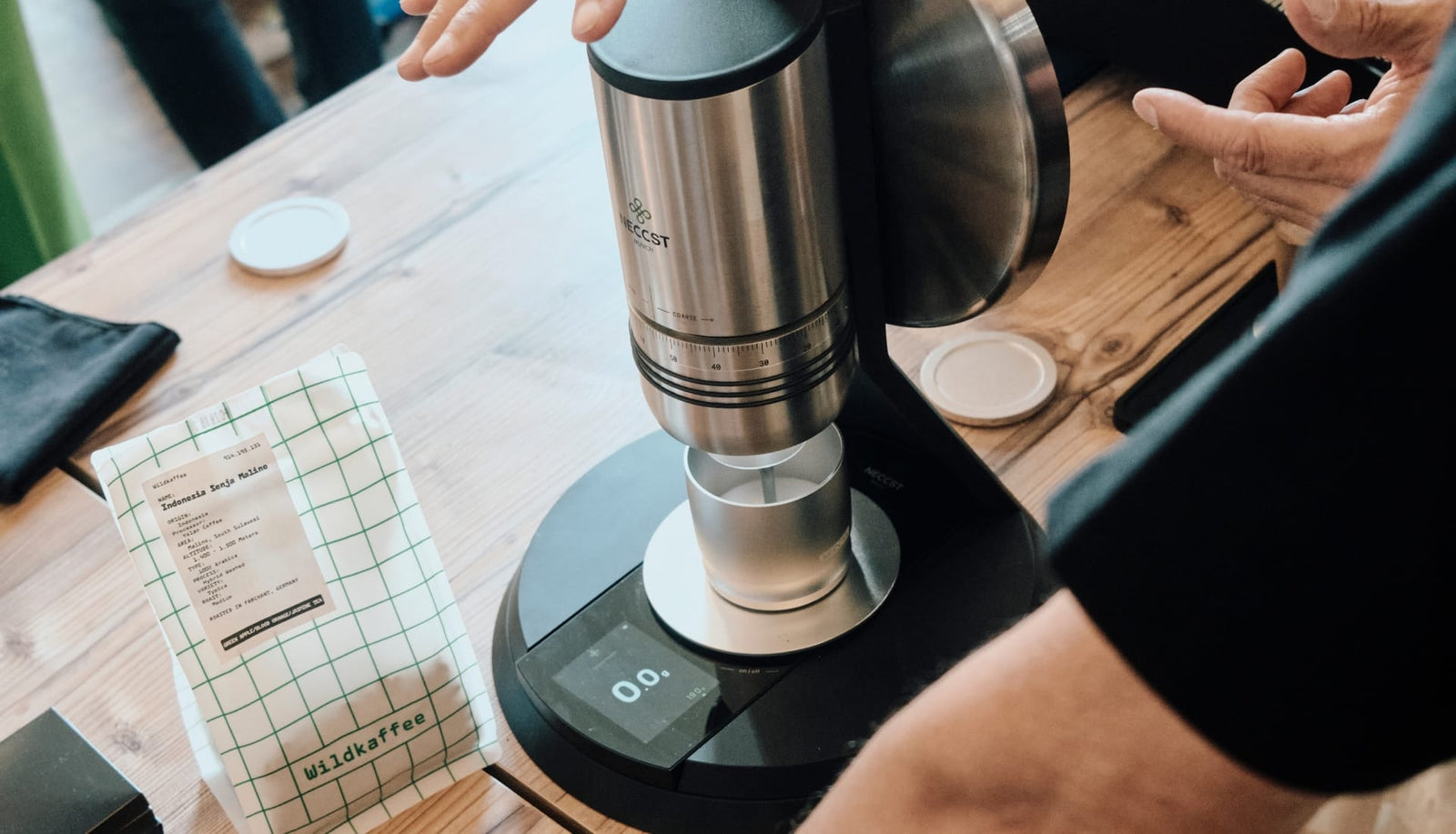
Frankfurt was our first major public appearance with the NECCST Series 1. We'd shown the grinder at Host Milano a few weeks prior, but Frankfurt was different. This wasn't a trade show behind glass. This was hands-on. Real baristas. Real beans. Real feedback.
Over two days, dozens of people ground coffee with the Series 1. Several kilograms went through it. The response to the look, feel, and function of the grinder was overwhelmingly positive. People commented on how smooth the grinding felt, how intuitive the stepless dial was, and how solid the whole thing sat on the counter. We watched coffee enthusiasts pick it up, figure it out without instructions, and start dialing in their shots. That's exactly what we'd designed for.
But here's the thing about real-world testing: it doesn't just show you what works. It shows you what doesn't.

The Teardown
Back in Munich, we did what we always do after a milestone: we fully disassembled the grinder and inspected every component for wear, alignment, and tolerances. What we found was sobering.
Some gaps and tolerances around components needed tightening for a cleaner overall fit. More critically, we found a manufacturing tolerance issue in the gear block, a key component responsible for alignment and smooth operation. The problem wasn't visible to the user, but we could measure it. And if we could measure it, it would eventually affect performance.
The root cause? Our prototypes had used fully CNC-machined gear blocks. For production, we'd switched to cast blocks to manage costs at scale. The casting process introduced tolerances that the CNC process hadn't. It was subtle, but it was real.

The Decision
We had a choice. Ship with a tolerance that most users would probably never notice, at least not in the first year. Or delay, redesign the part, and get it right.
We chose to get it right.
This isn't the part of the design process anyone wants to talk about. Delays are frustrating. For us even more than for our backers, because we're the ones who have to look at the problem every day and figure out how to fix it. But this grinder carries our name. It carries the trust of 125 people who backed us before they'd ever held the product. And it carries the design philosophy we've built our careers on: no shortcuts, no compromises.
The Static Issue
While we were at it, we also discovered a surface issue with the black base version. The plastic (PC) we'd selected for the base plate was causing significant static buildup, sending grounds spraying around the grinder in dry environments. The wood and scale versions didn't have this issue. After testing alternatives in the office, we moved toward an oil-finished black MDF solution that performed significantly better in early tests.
What This Means
We're looking at roughly two additional months before deliveries begin. That puts us into early 2026. We know that's not what anyone wants to hear, and we considered long and hard whether to share this publicly or wait until we had the fix confirmed.
We decided to share it now, because that's how we've communicated from day one. Honestly, even when it's uncomfortable.
The grinder that ships to you will be better because of Frankfurt. That's not a consolation. It's the whole point.
More updates soon. We'll share a detailed look at the gear block solution and the new material tests in the next post.
Fynn & Stefan


